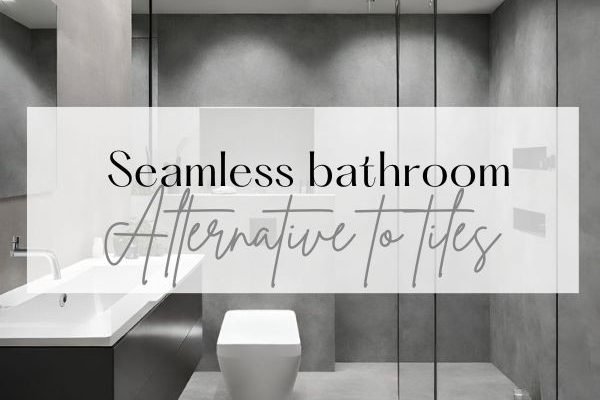
Anyone who wants to renovate or renovate the bathroom as part of a new construction cannot avoid the problem of floor and wall design. The question always arises spontaneously: tiles or seamless bathroom? The bathroom has now become more than just a space for daily hygiene. For many it serves as a wellness area where they can relax and unwind. That’s why bathroom design is also very important. The seamless bathroom is becoming increasingly popular as it represents a modern alternative to classic tiled walls. But what does seamless actually mean and what possibilities does this type of wall design offer? We answer all this in this blog post.
What is a seamless bathroom?
Basically, a seamless bathroom means nothing more than the fact that the classic tile look is dispensed with in the design of the floor and walls. Instead, materials are laid over large areas. This means that the walls have no joints, but are just as water resistant. Tiles represent a useful protection against humidity, especially in areas subject to splashes of water, such as in open showers, behind the bathtub or around the sink. The seamless variations are a welcome change here.
What are the advantages of a seamless bathroom?
On the one hand, a seamless bathroom impresses with its tidy spatial appearance. Small tiles create many grout lines, which often appear uneven and can visually make rooms smaller. Large floor and wall coverings, on the other hand, make even the smallest bathrooms or guest toilets seem more spacious. A seamless bathroom offers not only a pleasant appearance but also practical advantages. Tile joints are very sensitive to dirt, discoloration or mold and must be cleaned regularly. In comparison, seamless surfaces can be easily cleaned, allowing for better hygiene with relative ease.
Which materials are suitable for the seamless bathroom?
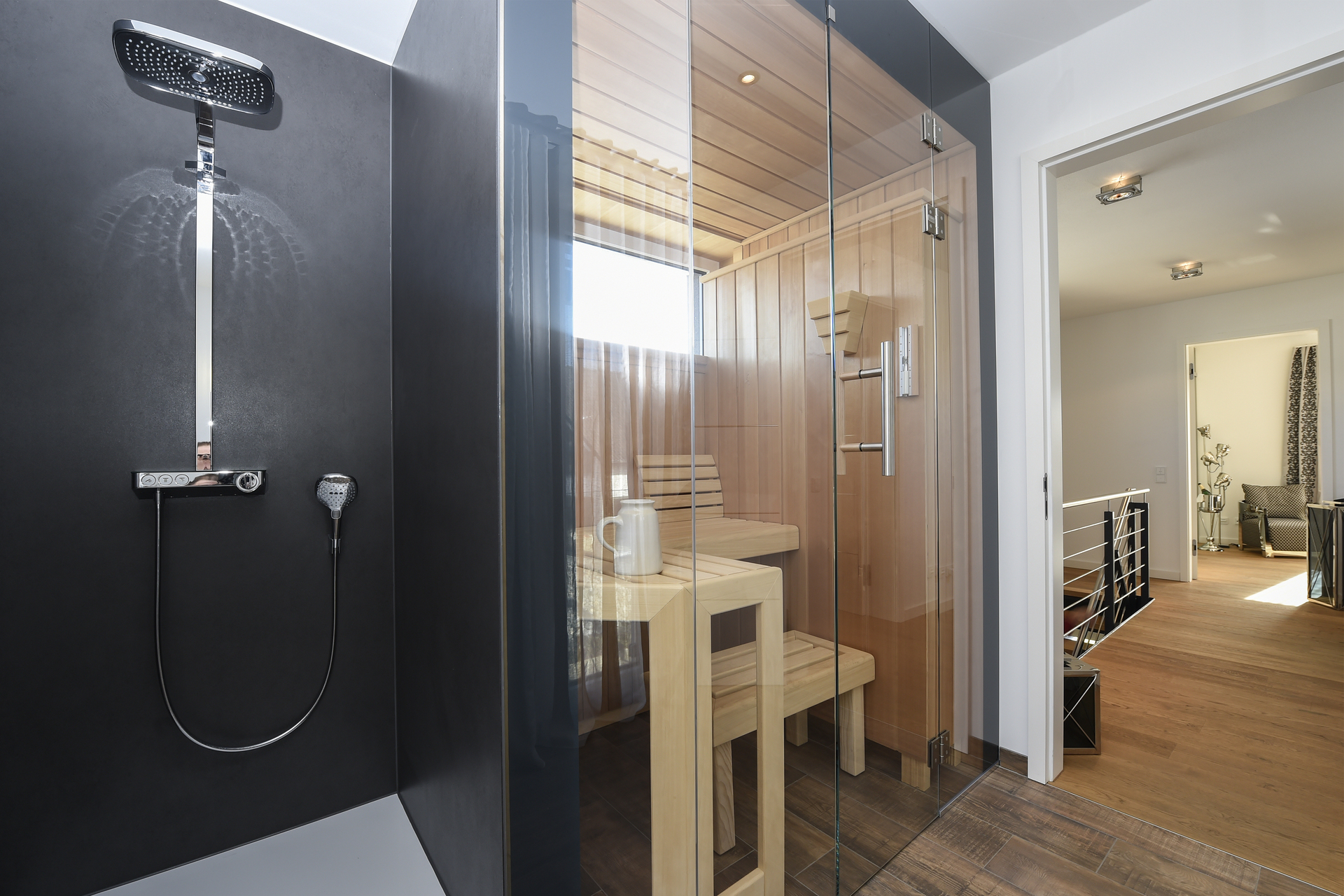
To ensure that alternative floors and coverings are resistant to splashes of water and steam for a long time, suitable materials are needed. There are several options available for seamless flooring and wall coverings. We have collected the most common variants for you here:
Kalkputz/Tadelakt
With lime plaster, builders are turning to an environmentally friendly classic consisting of purely mineral components. The plaster breathes, so to speak, as it absorbs moisture and releases it again. Lime plaster is therefore ideal for damp rooms.
Tadelakt it is also a special lime plaster made from fine shell limestone, which is polished and treated with olive oil to give it a warm, velvety appearance. This technique comes from ancient Morocco and gives the seamless bathroom walls a particularly high-quality finish with a smooth surface from which the water simply flows.
Beton Ciré
Those interested in a seamless bathroom with minimalist elegance should consider Beton Ciré. It is a high-quality plaster with a concrete appearance that creates an industrial and modern look. A colored version is also possible. Beton Ciré must be sealed and is therefore waterproof and therefore ideal for splash water areas in the bathroom.
Steinspachtel
Stone filler is applied similarly to plaster. The material is breathable and tolerates moisture easily. Thanks to the composition of natural materials of different grain sizes and colourants, bonded with resin, the appearance can be adapted to taste. Stone filler is a natural yet elegant way to create a seamless bathroom.
exposed screed
What would otherwise serve as a basis for floor coverings becomes a design element here. The exposed screed as floor and covering is sealed and sanded to make it waterproof. And if you like color, the designer screed offers the desired vibrancy. Like Beton Ciré, the exposed screed has an industrial, very modern look.
Resin
Synthetic resin is a very robust and easy-care material that offers a wide variety of colors. However, the processing is very demanding and should only be carried out by a certified specialist. Furthermore, synthetic resin is not breathable. Therefore, good ventilation is necessary so that moisture can escape from the bathroom.
Mat
A seamless bathroom can also be covered with special non-woven or fiberglass wallpaper, which is waterproof and steam resistant. There are almost no limits to colors and patterns. When wallpapering your bathroom, the right glue plays a crucial role so that the panels do not detach from the walls due to moisture. And even if the wallpaper is washable, a robust, waterproof material is recommended, especially for areas with splash water.
Decorative plate
Decorative panels also create a seamless look. However, large format panels are more likely to be seen as a selective eye-catcher. They create beautiful accents, especially behind sinks or in open shower areas. The colored panels are made of glass or acrylic glass, with the decoration applied to the back. You may also know them from the kitchen, where they can serve as splash guards behind the stove and sink. A variant made of aluminum composite material with a molded surface is also possible. This can imitate natural materials very realistically. Natural stone slabs can also look great in an open shower.
Holz
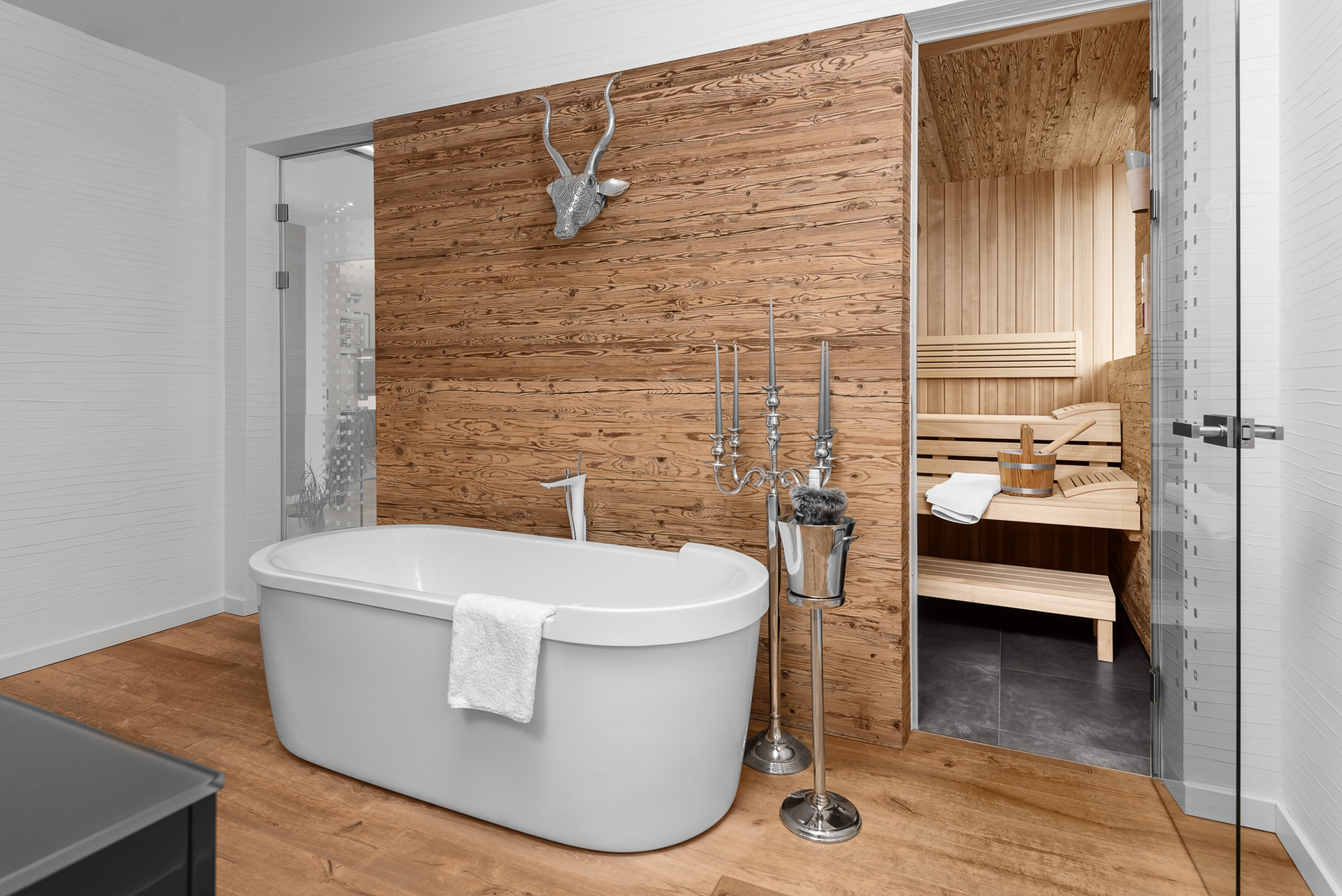
When it comes to furnishing materials, wood is simply indispensable. No wonder, because the renewable raw material creates a warm and comfortable atmosphere. For the bathroom you should use wood essences that absorb little humidity. These include, for example:
- oak
- Nussbaum
- Douglas fir
- Teak
- Merbau
However, wooden surfaces also require more maintenance as they need to be oiled or waxed regularly. For this reason they are best suited as spot accents and should not be placed in splash areas. If you love real wood, you may be willing to accept this additional expense. With careful sealing, a wood floor can also be a beautiful, seamless alternative in the bathroom. However, you should definitely avoid standing water and long-term moisture with wood.
The tiled bathroom
Are the tiles outdated? This question deserves a clear no. A lot has happened in the tile market: today there is an almost infinite repertoire of design options with which you can transform a bathroom into a real design piece. If you can’t decide, simply combine tiles with seamless elements. This allows you to set specific accents that really stand out when combined with seamless surfaces.
Suggestion: If you are planning a complete or partial covering of floor and wall tiles, you must pay great attention during installation so that the floor joints coincide with those of the walls to create a calm image of the room.
What are the advantages of a tiled bathroom?
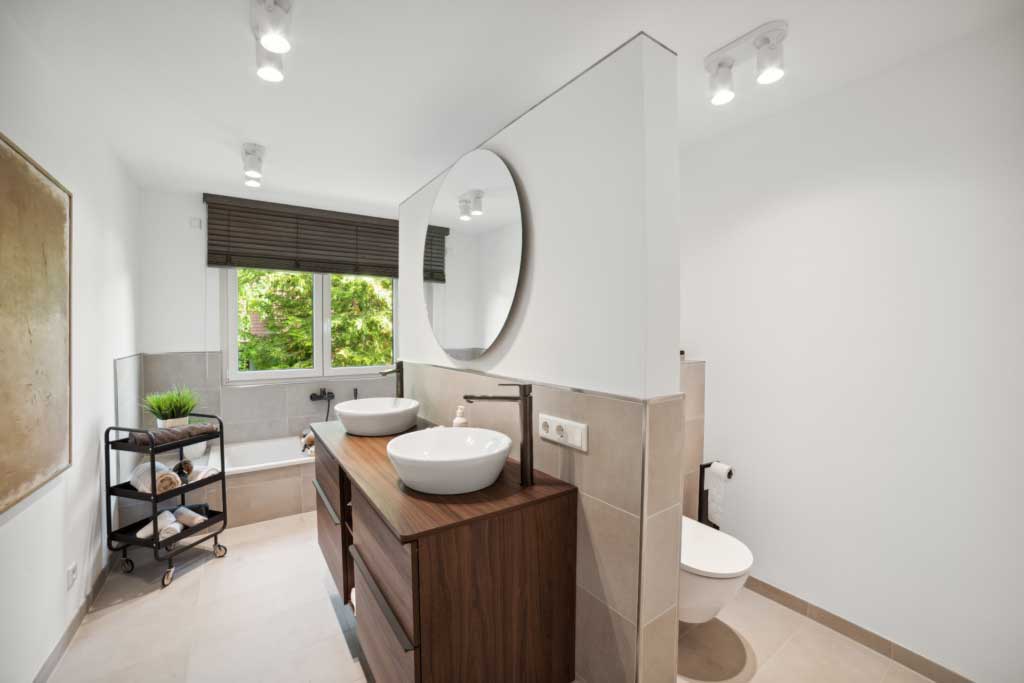
Unlike a seamless bathroom, installing tile is quick and relatively easy. They also do well when it comes to caring. They can be easily cleaned by wiping or vacuuming. Another advantage in favor of tiles is the healthy indoor climate to which they contribute: Ceramic tiles do not release harmful substances into the air because they consist of natural components such as feldspar, clay and other mineral substances. This makes them more environmentally friendly than many other materials. Furthermore, the tiles are insensitive to moisture, durable and ideal for combination with underfloor heating as they have good thermal conductivity. Depending on the abrasion class, the tiles also offer excellent slip resistance, which is particularly important in open showers.
Which types of tiles are suitable for bathrooms?
The choice of colors and appearance of tiles is overwhelming: they are available with a deceptively real look of wood or stone and in many different formats. In fact, there are also tiles which, due to their size, allow the joints to fade into the background. Ceramic tiles, for example, are available in all price ranges: from the cheapest stoneware to high-quality porcelain stoneware. Other options include:
- Tiles with a deceptively real wood look
- Natural stone tiles
- Tiles with glazed or unglazed surface
- Granite, marble, sandstone, limestone, slate tiles
- small mosaic style tiles
How much does a seamless bathroom cost compared to a tiled bathroom?
The material costs for a seamless bathroom are about the same as for a high-quality classic bathroom with tiles. Of course, the choice of material also plays an important role. The higher the quality of the design, the more expensive the project will be. The decisive difference lies in the costs of construction and design: the professional construction of a seamless bathroom costs approximately double compared to the professional installation of tiles. These are easier to install than materials that create a seamless look. Careful planning and execution is particularly important here. For example, it must be ensured that all closures have been sealed and that the various seals have been carried out carefully.
For further reading
Of course, the floor and wall covering are not the only points to consider when designing the bathroom. We have collected tips for the perfect bathroom furniture for you in our article «Bathroom furniture: how to ideally arrange bathroom furniture».
Further useful tips on bathroom planning can be found under “New bathroom renovation and renovation – everything you need to know!”.
latest posts published

The Magic of Flowers from Seeds: How to Grow Beauty from Scratch – Home & Family > Plants
The most beautiful autumn flowers. Perennial plants to have in the garden – Home and family > Plants

Sunflower, romantic and seductive – Home and family > Plants
Plants with good Feng Shui – Home and family > Plants

Which vegetables grow the fastest? 10 varieties to have in the garden – Home and family > Plants
Dwarf roses: color and freshness – Home and family > Plants

How to make potted lilacs last longer – Home and family > Plants

Bayer plants for a green future! – Home and family > Plants
Trees with good Feng Shui – Home and family > Plants