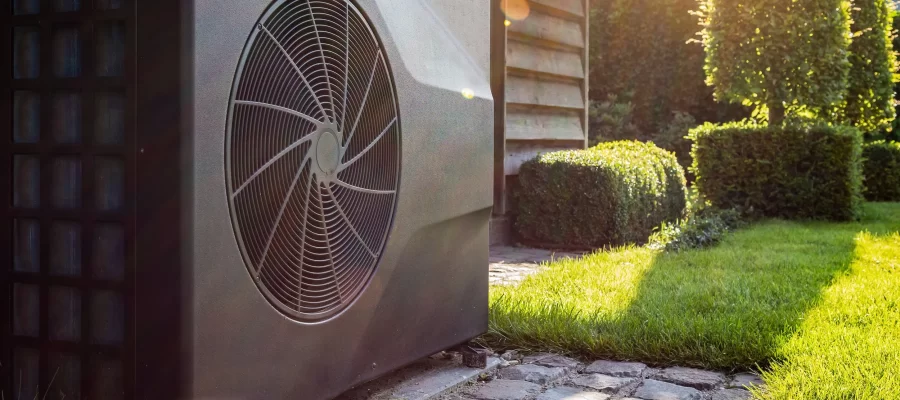
There are many types of heating. However, due to energy saving regulations, innovative and environmentally friendly heating systems currently receive the most attention. Heat pumps are particularly popular because they do not require fuel to heat living spaces or water. In this article we explain how exactly heating with a heat pump works and why installing a heat pump is convenient for homeowners.
How does heat pump heating work?
For heat pump heating, the environment, such as air, ground, thermal energy removed e converted into useful heat.
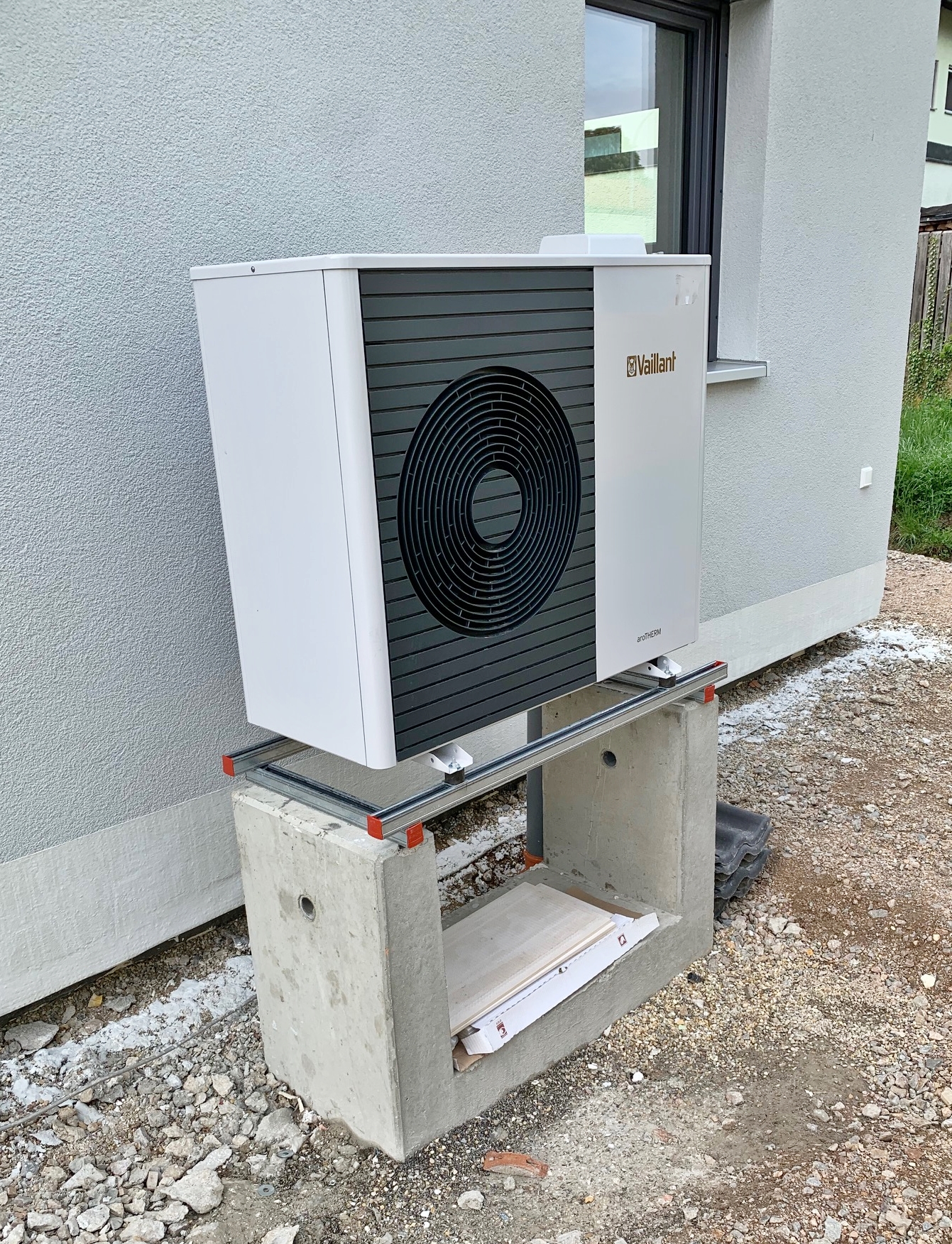
One of the most popular heating systems is the air-water heat pump, which uses a thermodynamic cycle. It works like this:
- In the first stage, a refrigerant, the so-called brine, absorbs ambient heat. The agent is usually a mixture of water and antifreeze and has an extremely low boiling point, so it evaporates even at low temperatures.
- The refrigerant in the form of vapor is compressed using a pump, which also causes an increase in the temperature level, as the pressure creates heat.
- The generated heat is released in the condenser and fed into the building’s heating circuit. The refrigerant liquefies again.
- Finally the expansion valve relaxes, the pressure drops and the thermodynamic cycle can start again.
What types of heat pumps are there?
Heating with a heat pump can be based on ambient energy from the air, ground or water. Depending on where the thermal energy comes from, the heat pump works differently.
Air source heat pump
Air source heat pumps use outside air as an energy source. A distinction is made between two types of system: The Air-water heat pump As explained above, it is equipped with a refrigeration circuit with which it is possible to heat both the ambient air and the domestic hot water. Air-to-air heat pumps However, they do not require a refrigeration circuit. Instead, fans draw in outside air and plate heat exchangers integrated into the heating system heat it.
Geothermal heat pump
The geothermal heat pump gets its name because it raises heat from the ground to a higher temperature level to heat buildings and water. Geothermal probeswhich are installed up to 100 meters deep into the ground, or Geothermal collectorsinstalled at a maximum depth of 2 meters underground, they absorb heat from the ground. While the first variant can exploit geothermal energy regardless of the season, the second is exposed to natural temperature variations linked to atmospheric conditions. Since the effort required to install geothermal collectors is less, this variant is also more economical.
Water heat pump
Water heat pumps are also available Water-to-water heat pumps called because they work with thermal energy from aquifers. For this they use two wells: one Suction and delivery wellswhich absorbs groundwater, and one Fountainwhich allows the water already used to exit the circuit. The clear advantage of the water heat pump is its small footprint. It also serves as… passive cooling of living spaces.
Rötzer tip: If you want groundwater to run your water heat pump, you need official approval. To do this, contact your local water authority.
That’s why it’s worth heating with a heat pump
Heat pumps rightly enjoy great popularity. Your operation requires no fuels and then fully enable CO2-neutral heating. This means not only relief for the environment, but also an economic advantage for building owners, who are therefore exempt from purchasing heating materials such as oil, gas or wood. Next to the long-term cost savings Heating with a heat pump is also extremely simple energy efficient. Although the heating system is electric,… The energy required is only one third of the energy produced so that the heat pump quickly compensates for its effort. This is why they fall Heating costs When heating with a heat pump, consumption is significantly lower than with other heating systems.
Cool rooms with heat pump
In the summer months most heating systems take a break. However, heat pumps can also be used as an air conditioning system to cool living environments. A distinction is made between active and passive cooling. Al active cooling Only the compressor remains in operation and the refrigeration circuit works in reverse: the thermal energy is not subtracted from the heat source – air, water, earth – but is added to it. THE passive cooling On the other hand, it takes advantage of the fact that thermal energy always migrates towards the colder system. The heating system and compressor are bypassed and the heat is automatically fed into the heat source. Therefore, passive cooling is less intense than the active variant.
Rötzer tip: Our Rötzer brick climate ceiling uses the principle of heat radiation to heat or cool rooms with minimal energy expenditure. This makes it the perfect complement to a heat pump, but it can also be used with any other heating system. You can find more information about this in our blog post “Building to save energy: the air-conditioned brick ceiling as an effective heating and cooling system”.
For further reading
Is your goal to live energy neutral? Then integrate your heat pump with a photovoltaic system and produce the electricity needed to heat yourself. You can find out how a house with a solar system can work in our “Photovoltaic experience report: Solar energy on a brick house from Rötzer”.
latest posts published

The Magic of Flowers from Seeds: How to Grow Beauty from Scratch – Home & Family > Plants
The most beautiful autumn flowers. Perennial plants to have in the garden – Home and family > Plants

Sunflower, romantic and seductive – Home and family > Plants

Plants with good Feng Shui – Home and family > Plants

Which vegetables grow the fastest? 10 varieties to have in the garden – Home and family > Plants
Dwarf roses: color and freshness – Home and family > Plants

How to make potted lilacs last longer – Home and family > Plants

Bayer plants for a green future! – Home and family > Plants

Trees with good Feng Shui – Home and family > Plants