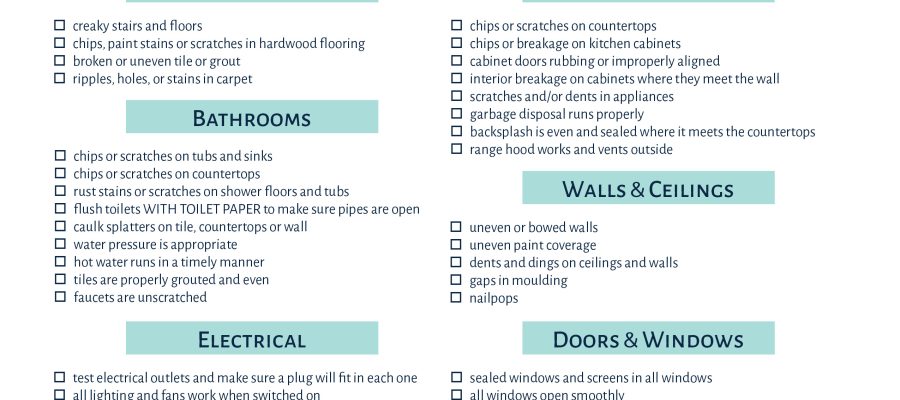
Once you have made the decision to build your home and obtained financing, it is a good idea to create a home construction checklist. Often the first step is to look for a property. Which property is most suitable always depends on the needs of the building family itself.
First item on the housing checklist: ownership
Before you even start planning your dream home, you need the right property. Finding it can sometimes take a lot of time and patience. The following questions can help you choose the right property:
- How large does the property need to be?
- Do you want a garden?
- What is the neighborhood like?
- Is the property well connected to public transport?
- Are there public facilities such as hospitals nearby?
- How is the traffic situation? Noise pollution?
- How long is the commute to work or school?
Administrative procedures before purchasing the property
Once all these questions have been clarified and a suitable property is found, it is recommended to make a few visits to the authorities before purchasing. Again, a checklist for building a house is helpful:
1. State Environmental Protection Bureau
Here potential buyers can check whether the land may be contaminated with environmentally harmful substances. When a house is subsequently built, special requirements for soil revitalization may apply.
2. Land register
Potential buyers can inquire at the land registry whether the property is encumbered, for example, by a mortgage. The land registry office is also responsible for modifying and deleting registrations. The only legal owner is the one who is registered in the land register. The notary usually carries out the registration after the conclusion of the purchase contract. Please note: there are costs for the notary himself and also for the registration.
3. Land Report and Development Plan
Before the property is actually purchased, it is best for builders to find out about the condition of the land. To ensure that costs don’t skyrocket during construction, you need to evaluate the ground conditions.
The development plan contains information on the type and extent of possible development of a property and the use of open spaces. Therefore, it largely determines the appearance of the house, the location on the property and even the condition of the driveway, carport and the like. If you want to avoid unpleasant surprises, consult the development plan before purchasing the property.
Next on the housing checklist: submitting your planning application
Once you have found the right property, concluded the purchase contract and registered the new owners in the land register, it is now time to submit a planning application. The Building Model Ordinance regulates which building models are required. This varies depending on the federal state.
The construction application usually contains:
- The application form
- Official site plan
- 1:100 scale construction drawings and construction description
- Information on property drainage, water supply and road development
In most cases, builders can download the application form online from the relevant municipality. You can obtain the plan from the cadastral or geographical office, the land surveying authority. The construction drawing and a detailed textual description of the construction are prepared by the architect or construction company. For some construction projects, or for regional reasons, additional documents may be needed, such as: B. an open floor plan. The competent municipality provides information on all necessary forms and applications. Construction plans must also be signed by a project author authorized to draw up construction plans. This could, for example, be an architect, a construction technician or a civil engineer. Also in this case the regulation varies depending on the federal state.
Important: The complete planning application must be submitted in at least three copies. Please ask your local building authority for information.
What happens now with the planning application?
If all documents are available and submitted correctly, the building application is at the planning permission stage. The building authority is now examining the construction project. Depending on the scope of the exam, this may take a few weeks.
Our Rötzer promise: We will of course provide you with advice and support on your construction project and answer all your questions. From the first idea to the handing over of the keys.
latest posts published

The Magic of Flowers from Seeds: How to Grow Beauty from Scratch – Home & Family > Plants

The most beautiful autumn flowers. Perennial plants to have in the garden – Home and family > Plants

Sunflower, romantic and seductive – Home and family > Plants

Plants with good Feng Shui – Home and family > Plants

Which vegetables grow the fastest? 10 varieties to have in the garden – Home and family > Plants

Dwarf roses: color and freshness – Home and family > Plants

How to make potted lilacs last longer – Home and family > Plants
Bayer plants for a green future! – Home and family > Plants
Trees with good Feng Shui – Home and family > Plants