There are many decisions to make when building a house. This also includes the shape of the roof that the finished house will subsequently have to decorate. There is a wide choice of roof variants. How about the common gable or gable roof? The modern flat roof or perhaps the high hipped roof? Or could it perhaps be one of the special roof variants? For both potential builders and anyone else interested: To give you an overview, we have summarized five not-so-typical roof variants below.
Attic roof

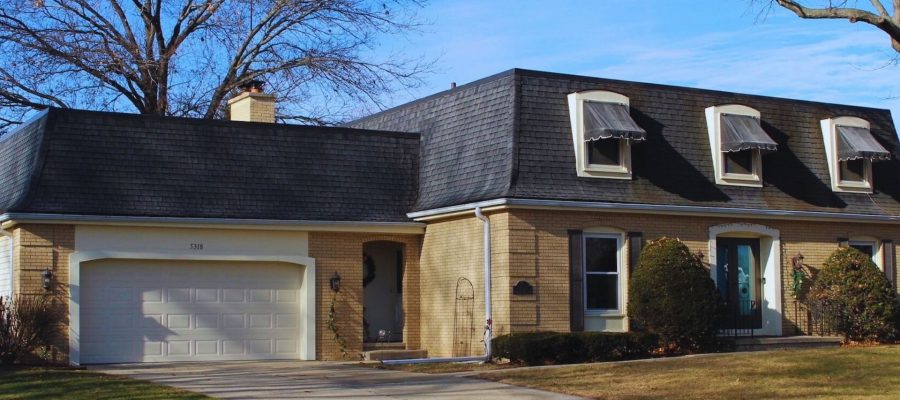
The first of the special variants of the roof is the so-called Attic roof. It exists in two different versions: As Gable roof and how Hip roof. In general it is characterized by the different inclination angles of its roof surfaces, which meet in a characteristic curve. The high slope of the lower roof area, together with the high sloped ceilings, creates a large full floor under the roof. The resulting space can be used as additional living space. The shape of the roof is due to the French architect François Mansart Backwards. It was born in the Baroque era as an expedient to reduce the tax, which at that time in Paris was only applied to entire floors. However, the mansard roof soon established itself and since then adorned a large number of magnificent buildings and noble villas. The mansard roof gives an elegant look to even the newest residential buildings, but this type of roof also requires a lot of maintenance.
Sheddach/Sägezahndach

Technically it exists Sheddach from a number of different Gable roofs. This is how the peculiarity of this special roof variant comes about: The jagged profile, which also gives the shape of the roof the name sawtooth roof. This particular construction gives not only the characteristic appearance of the shed roof, but also its particular function. On the one hand it allows you to reduce the overall height of the roof and, on the other, to cover large rooms and surfaces. That is why the shed roof is often used for factories and warehouses, museums and studios. This way it will give your home an industrial and trendy touch. Since the shed roof is usually made as a glass roof, a lot of daylight enters the room which, if the roof is oriented to the north, illuminates the room over a large surface area without dazzling. So if you like it flooded with light, this is the right place for you.
Schleppdach

This is called a sliding roof Extension of another roof. The main roof, which usually consists of a gable roof, merges with the final roof. This is, so to speak, «pulled» by the main roof. The pitched roof only has the shape of a sloping roof and covers an additional part of the building, such as a garage or terrace. When building a pitched roof, it is important to consider the angle of the existing roof. If it is very steep it is not possible to connect the pitched roof at an equally steep angle, otherwise the gutter would be too low compared to the roof. To avoid this, the sliding roof is attached to the main roof via a bend and is equipped with both a gutter and an appropriately sized drain pipe.
Barrel roof
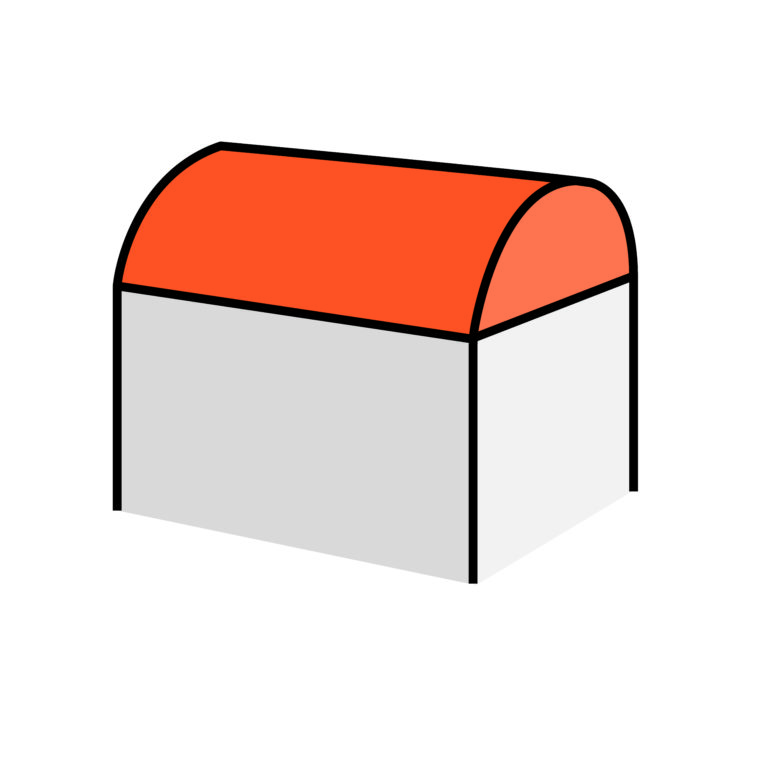
The name derives from the external appearance of the cylindrical roof which, in section, looks like a horizontal barrel. THE Barrel roof it is now historic as a form of roof because the construction was used in Jericho several thousand years before Christ. Today they are only occasionally seen as the roofs of industrial buildings. Several barrel roofs are usually tied together to form one long roof area, for example in covered shopping arcades and market areas. Visually, the barrel roof is quite impressive. However, the design of this roof variant is complex because the distances between the individual «tons» must be calculated precisely. This is a special form of barrel roof Zollinger roof. This consists of prefabricated wooden trusses. Using a systematic construction method, these are assembled in a diamond shape to form the typical semi-circular mesh construction from which the roof is subsequently created.
Domed roof

The dome as a building has been around the world almost since time immemorial. And not without reason, because their shape is self-supporting and allows you to cover both small and large surfaces, without any support. Accordingly, it is also popular as one of the special roof variants. It falls into the category of curved roof shapes, or within that into single surface roof shapes. However, it does not have to be continuous, but can also consist of folded structures made up of individual segments. In the Renaissance era the dome represented a new type of construction to cover large buildings such as the Florence Cathedral. Today it is mainly used as a steel structure for modern buildings, for example the Reichstag in Berlin, for which the dome is a significant element.
For further information: The most common roof variants
Which roof shape suits your needs? Click here to see them Advantages and disadvantages of the most common roof shapes – from gable roofs to hip roofs to pitched roofs and flat roofs!
latest posts published

The Magic of Flowers from Seeds: How to Grow Beauty from Scratch – Home & Family > Plants

The most beautiful autumn flowers. Perennial plants to have in the garden – Home and family > Plants

Sunflower, romantic and seductive – Home and family > Plants
Plants with good Feng Shui – Home and family > Plants

Which vegetables grow the fastest? 10 varieties to have in the garden – Home and family > Plants

Dwarf roses: color and freshness – Home and family > Plants

How to make potted lilacs last longer – Home and family > Plants

Bayer plants for a green future! – Home and family > Plants
Trees with good Feng Shui – Home and family > Plants