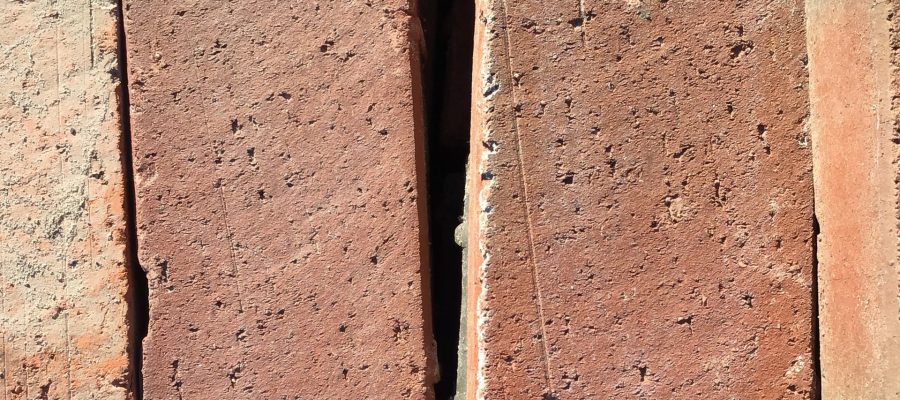
Brick has been one of the most popular materials for building houses for centuries. After all, it combines many positive properties, such as good thermal insulation, a pleasant indoor climate, longevity and a high level of sound and fire protection. But if you want to take advantage of the benefits of this popular building material, you need to choose the right brick, because not all bricks are the same! What originally started with the classic clay brick has developed further over the years. Industrial development has introduced numerous new types of bricks to the market. From solid bricks to clinker bricks to hollow bricks – bricks are now available in a wide variety of designs. But what kind of bricks should you use to build a house and what exactly are the differences?
Brick – ideal for masonry
The term brick is a collective name for all types of bricks which, thanks to their format and qualitative properties, are suitable for the construction of load-bearing walls. Due to its excellent physical-constructive properties, brick construction is ideal for house construction. Basically DIN 105 regulates the requirements for bricks. The following properties are defined here:
- Type and shape
- Brick dimensions
- Compressive resistance
- Apparent density
- Labeling
- Frost behavior
However, there are also types of bricks that deviate from the standard specifications in some areas. However, these then require a building inspection and approval. As a rule, these are so-called heat-insulating bricks that have been optimized in terms of thermal insulation properties. At European level, the brick standard EN 771-1 regulates the hygiene, energy saving, mechanical resistance and acoustic and thermal insulation of bricks.
Types of bricks in brief
Bricks differ in terms of production, physical properties of the building and subsequent recommended use. The following types of bricks are often used to make walls:
- Vollziegel
- Clinker
- Lochziegel
- Planar brick
Vollziegel
Solid bricks, often called imperial bricks, are made up of at least 85% brick material. It is usually made of clay and has excellent sound insulation properties, but poor heat insulation. Originally solid solid bricks are usually only used as facing bricks in house construction. Unlike hollow bricks, these are frost resistant and are therefore suitable for exposed brickwork.
Clinker
It is also called a special version of solid brick Clinker designated. The difference lies mainly in the production. The building material is fired at around 1200 °C so that the pores can close completely. In specialist circles this process is also known as sintering. This makes the brick more pressure-resistant, stable, smoother and more resistant to weathering. Due to its similar properties to solid bricks, clinker bricks are ideal, for example, for facade layers.
Lochziegel
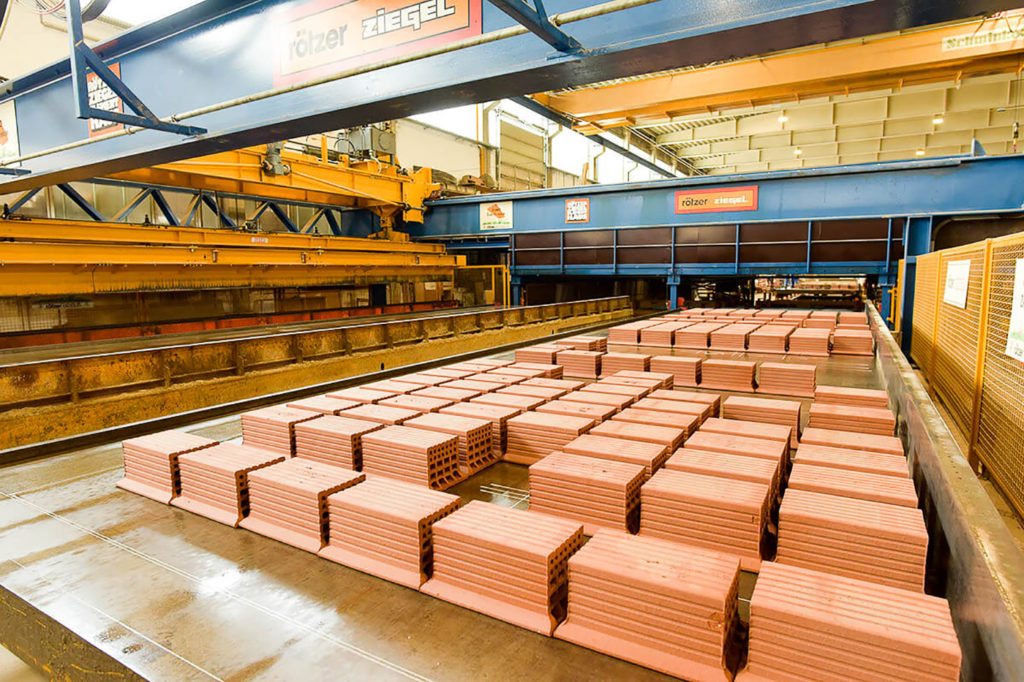
The first choice for building houses nowadays are the so-called Lochziegel. The perforated portion reduces thermal conductivity, which leads to better thermal insulation. Here we distinguish again between: Hochlochziegel AND In bricks the holes are vertical (bricks with a vertical hole) or horizontal (bricks with an elongated hole) with respect to the supporting surface. The bearing capacity of vertical drilling is significantly higher than that of cracked brick. In new heat-insulating bricks the cavity of the hollow brick is filled again with insulating material. This makes the brick material also suitable for passive houses or energy-efficient brick houses.
Planar brick
Planar bricks are generally designed as hollow bricks. The special thing is that after the firing process they are sanded and smoothed. This means that, unlike solid bricks, flat bricks can be laid in a thin layer of mortar of 1-3 mm. Thanks to flat tiles you can save time. Furthermore, less mortar is required. This in turn has the advantage that less moisture penetrates the masonry. Furthermore, there are no thermal insulation losses caused by the mortar joint.
Unlike flat bricks, square bricks are not smoothed after the firing process, which in turn can cause unevenness. To compensate for these irregularities, a thicker mortar layer of approx. 10 mm are required. However, this has the disadvantage that more moisture can penetrate into the masonry. And the thermal insulation properties of block brick are also not optimal. A special thermal insulation mortar can help here. Due to the lack of smoothing, block bricks are generally cheaper than flat bricks. As a rule, they are designed as hollow bricks.
On purpose: Concrete or sand-lime bricks are often mistakenly associated with bricks. Except for shape and strength, they have little in common.
Are you also a fan of brick as a building material? Then find DIY ideas with old bricks for your garden here.
latest posts published

The Magic of Flowers from Seeds: How to Grow Beauty from Scratch – Home & Family > Plants

The most beautiful autumn flowers. Perennial plants to have in the garden – Home and family > Plants

Sunflower, romantic and seductive – Home and family > Plants

Plants with good Feng Shui – Home and family > Plants

Which vegetables grow the fastest? 10 varieties to have in the garden – Home and family > Plants

Dwarf roses: color and freshness – Home and family > Plants

How to make potted lilacs last longer – Home and family > Plants

Bayer plants for a green future! – Home and family > Plants

Trees with good Feng Shui – Home and family > Plants