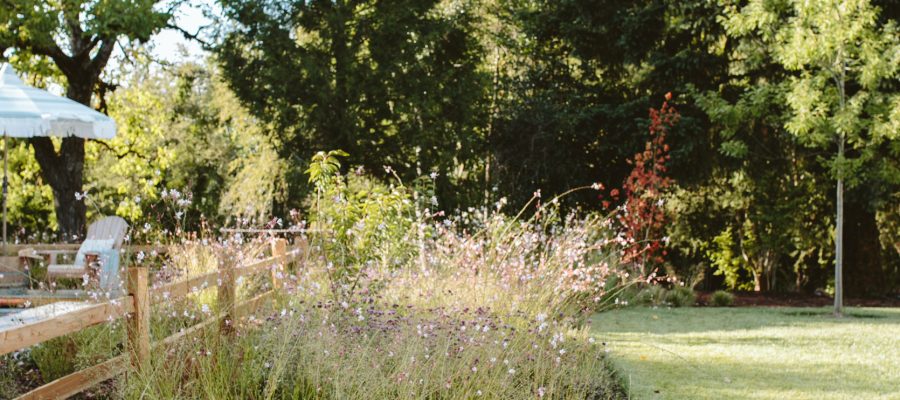
With the arrival of spring, it’s finally time for many homeowners to get out into the garden! Then the green plans developed during the long winter months are put into action and many internal relaxation oases undergo a general overhaul. The current trend is to move further and further away from English lawns and extravagant hedges to return to naturally cultivated gardens. This is a good thing, because it is not only the inhabitants who benefit from the naturalness at hand, but also the animals and the environment. Would you like to create a natural garden too? In this article you will find advice on how to plan, create and design a natural garden.
What is a natural garden?
A natural garden – or wild garden – is a garden in ecological balance and therefore means one thing above all: life. Such a garden offers people, plants and animals the opportunity to grow and thrive. Sustainable ecosystems, like those found in nature, therefore form the basis of a natural garden. These include, for example, meadows, bushes, ponds and piles of stones. If you create a natural garden you should definitely avoid chemical and synthetic substances such as fertilizers, pesticides and peat.
Creating a wild garden: What belongs in a wild garden?
As with all other gardens, there is no template for design. There are a variety of options available to you on how to create your garden. To inspire you, we have collected some ideas for you:
- Unused corners are perfect for wild meadows. For this purpose, free areas between fruit trees, behind compost or along garden walls can be used. Not only the owners of the garden will be happy with the flowers, but also the bees and butterflies.
- The slopes can easily be cultivated with wild herbs. Herb hills not only look beautiful, but they also smell wonderful when the sun shines on them in summer.
- Fruit trees and berry bushes they usually produce more fruit than you can eat. But as we all know, sharing is fun and the animals will thank you if you leave some fruit hanging while harvesting.

- Heaps of stones and piles of dead wood are suitable as dry biotopes. They are an ideal home for cockroaches, lizards, spiders and even hedgehogs. Alternatively, old tree stumps can be used, which also have a decorative appearance in the garden.
- Wet biotopes such as garden ponds serve as a place for birds and other animals to drink. Once created, it is important to let it develop on its own and not interfere with the balance of the biotope.
- Insect hotels or dry stone walls offer insects a place to shelter. Reptiles such as lizards and slow worms also like to seek refuge in cracks in walls. If you have any hollow bricks left over, they can be used as nesting aids.
- Compost piles are a real benefit to people and animals. They provide a habitat for worms and insects, while composted soil is perfect as a natural fertilizer for fruit and vegetable plants in the garden.
Native plants for the natural garden
The name «Wildgarten» already says it: here grows what can also be found in the «desert» or in local nature. While cultivated plants and exotic plants are beautiful to look at, they often do not thrive in a foreign climate. Native plants, on the other hand, develop fully and provide animals with food sources essential for their survival.
Wildflowers
Wildflowers usually grow wild, in forests and meadows. Unlike ornamental plants, they are not cultivated and therefore carry a unique natural beauty. They can flower in a wide variety of colors, are extremely bee-friendly, and also provide good soil conditions. The following wildflowers are ideal if you want to create a natural garden:
- Akelei
- Wood anemones
- margherita pizza
- St. John’s Wort
- Klatschmohn
- Kornblume
- thrush
- Natternkopf
- Dandelion
- Primrose
- Meadow cornflower
- Wild carrot
Wild herbs
Dandelions, nettles, herbaceous plants and co. – wild grasses are mistakenly labeled as weeds. Not only do they contain healing powers, but many of them also flower beautifully and are therefore real bee magnets. Common wild herbs include:
- Nettle
- Greedy
- Gundermann
- Dandelion
- Roter Wiesenklee
- Sorrel
- yarrow
- Plantain plantain
wild bushes
Similar to wildflowers, wild shrubs are not cultivated but grow in their natural form. In a natural garden there should be no shortage of native trees. There they form both a habitat and a food source for many insects, while serving as a privacy screen for people and also as a visual highlight in the garden. The best time to plant wild shrubs is from October to April. Typical wild shrubs include:
- European rate
- Rock pear
- Dog rose
- Kornelkirsche
- Pfaffenhütchen
- Snowball
- Black elderberry
- Seidelbast
Further information on native plants for your garden can be found on the website of the German Association for Nature Conservation (NABU).

Creating a natural garden: tips for creation
If you want to create a natural garden, a little planning before the actual redesign is never a bad idea. However, always keep in mind that such a wild garden also provides for natural growth. This can only happen if you give the plants enough space and do not force them to take on artificial shapes. The following points can be useful when designing your own natural garden:
- Make your wishes come true: Above all, it’s your garden. You should then plan and design it as you wish. Don’t want dead wood in your yard, but think stones are decorative? No problem. If you don’t like bushes but love flowers even more, you can focus on your flowers with a clear conscience. The design is entirely up to you. Above all, ask yourself what needs you have for your garden and don’t forget to create a corner of well-being for yourself.
- Consider the location of the garden: The best model for designing your natural garden is the garden as it currently exists. Observe its structure and imagine it in its natural state. Are there hills or valleys, areas for lawns or space for a natural stone wall? A garden pond or a group of berry bushes can also serve as a design reference.
- Find inspiration in nature: Would you like to make your garden as natural as possible? Then look around at peace and quiet in a natural environment. Take a long walk and observe your favorite corners. Some photos to help your thoughts can also be helpful. At home you have enough time to think about the implementation.
- Allow development: A garden is a constantly changing place. While some plants flourish, others die. Maybe your insect hotel is always fully booked, but the garden bird nesting places remain unused or the bushes simply don’t want to bear fruit. There’s no reason to get angry. Testing what works is also part of creating a natural garden. This will never be completely finished, but this gives you a lot of freedom for creativity.
Do you want a green lung for your home, but you simply don’t have enough space? Then you should think about a vertical garden. You can learn more in our blog post “Aiming High: A Vertical Garden for a Balcony or Terrace.”
latest posts published
The Magic of Flowers from Seeds: How to Grow Beauty from Scratch – Home & Family > Plants
The most beautiful autumn flowers. Perennial plants to have in the garden – Home and family > Plants

Sunflower, romantic and seductive – Home and family > Plants
Plants with good Feng Shui – Home and family > Plants
Which vegetables grow the fastest? 10 varieties to have in the garden – Home and family > Plants
Dwarf roses: color and freshness – Home and family > Plants
How to make potted lilacs last longer – Home and family > Plants
Bayer plants for a green future! – Home and family > Plants
Trees with good Feng Shui – Home and family > Plants